Wednesday, May 28, 2008
Class Response: Winds
Winds! Winds! Winds! Wind can get really annoying sometimes, but it also helps our world keep cool. You may think that there is only one type of wind, wind. Well, in class I learned that there are actually 2 major types of winds, local winds and global winds. Local winds are winds that blow in absolutely any direction, depending on the location. These winds don't travel very far, and only cover short distances. Global winds on the other hand, are winds that blow in one direction and cover larger distances and may appear all around the world. These winds depend on the Earth's rotation, the earths movement around the sun, and because of the round shape of the world. In addition, Jetstreams, known as wind phenomena, are long bands of very strong wind. They occur at places where the contrast between hot and cold is very large. Jetstreams occur generally at an altitude of 30,000 - 40,000 feet.

Monday, May 19, 2008
Class Response: The Earth's Atmosphere
In class, we began learning about the Earth's atomosphere, and its layers. The atmosphere is divided into five layers; troposphere, stratosphere, mesosphere, and the thermosphere, which has two parts, the ionosphere and exosphere. The atomosphere is thickest near the surface and thins out until it eventually merges with space. The troposphere is where all weather takes place, and is the layer we basically live in. All the rain, snow, wind, etc. occurs in this layer. Next, is the stratosphere is where the temperature increases with altitude. The thin ozone layer in the upper stratosphere has a high concentration of ozone, a reactive form of oxygen. Ozone is concentrated around an altitude of 25 kilometers. This layer is mostly responsible for absorbing the ultraviolet radiation from the sun. In the Earth's mesosphere, the air is relatively mixed together and the temperature decreases with altitude. The atmosphere reaches its coldest temperature of around -90°C in the mesosphere. This is also the layer in which a lot of meteors burn up while entering the Earth's atmosphere. Above the mesosphere is the ionosphere, the lower part of the thermosphere. where many atoms are ionized, which means they have gained or lost electrons so they have a net electrical charge. Scientists call the ionosphere an extension of the thermosphere, so technically the ionosphere is not another atmospheric layer. The ionosphere is very thin, but it is where auroras take place. Very high up, the Earth's atmosphere becomes very thin. The region where atoms and molecules escape into space is referred to as the exosphere, which is the upper part of the Earth's thermosphere. Thats what I've learned in class, and I hope all of that information enlightened you too! =]
Wednesday, May 7, 2008
Extra Credit: Weather Poetry
To the Thawing Wind
Come with rain. O loud Southwester!
Bring the singer, bring the nester;
Give the buried flower a dream;
make the settled snowbank steam;
Find the brown beneath the white;
But whate'er you do tonight,
bath my window, make it flow,
Melt it as the ice will go;
Melt the glass and leave the sticks
Like a hermit's crucifix;
Burst into my narrow stall;
Swing the picture on the wall;
Run the rattling pages o'er;
Scatter poems on the floor;
Turn the poet out of door.
-Robert Frost
This poem, To The Thawing Wind by Robert Frost definitely connects with weather in many ways. In this piece of poetry, weather is used to describe the setting and action. The poet uses his knowledge of weather to, as I said before, describe the place of the action, in a very creative way. Within this poem, the kind of weather discussed it rain, wind, snow, and sun(heat). Without the mention of weather, this poem would be completely different, because all of the imagery would be missing, making this poem truly boring. The literary techniques used in this poem in regards to weather are imagery, rhyming, and metaphors. This poem doesn't really further my knowledge about weather, because in this poem, weather is being used as description, not as information or scientifically.
Wednesday, April 16, 2008
Social Studies: Culture and Technology
There have been many advancements in technology over the past thirty years. Each and every one of them has impacted our society in one way or another. The greatest advancement in technology that I believe has extremely impacted our society would be computers. Over the years, they have changed eminently. Thirty years ago, computers were mostly used for just word processing. The computers back then were small and as I would describe them, 'chunky'. Nothing like what we have now, with our flat screen Mac computers and Dells. Now, we use the computer for many more things, such as internet, paint, communication, along with word processing as well. Internet has caused computers to become a huge part of our modern day lives, because it is just another way to communicate, using email and chatting. Computers have changed so much over the years, improving to such an extent, that computers back then look like nothing compared to computers now. Computers really do come in handy nowadays. For example, they are used at almost every workplace. Teachers, doctors, businessmen and women, architects, etc. use computers all the time to get their job done. Without computers, the world would definitely be a mess. Thirty years ago, it wouldn't have mattered much. But now, computers are a major factor of life. Overall, I believe that computers are the one advancement in technology that have made the greatest impact on our society.
Sunday, February 24, 2008
Class Response: Cork Popping Lab
In class, we did a very fun experiment using baking soda, vinegar, a cork, and a test tube. You may think, what fun can you have with those items? Well, our goal was to mix a specific measure of both baking soda and vinegar in the test tube, and cause the cork to pop off, and fly far. The further, the better. And if it managed to hit the window, even better. So we used a guess and check method, trying different measurements of both of those ingredients. It was fascinating. I had alot of fun with this lab. In the end, our group managed to make the cork fly 600+ cm. I found this lab very interactive and I liked it alot.
Thursday, January 17, 2008
Extra Credit: Science Website
The website I chose is http://www.extremescience.com/
This site does not have any corporate sponsors. It is completely run and paid for by Elizabeth Keller, the creator, author and webmaster of the Extreme Science website. This website is about the various branches of science, A-Z. Extreme Science is the best place to find world records in natural science, including earth science and the plant and animal kingdom. The site tell you who holds the records, and also key science concepts are used to explain the story behind the record. Also, a huge collection of science and technology information and resources are available. Students doing research projects of reports will find this website a big help. The positive aspects of this site are that it gives you information for any science related topic or subject. The negative aspects of the site are that you never know if the given information is true or false, although usually, the information is correct. This site could be used for research projects, research reports, or just plain finding out facts for fun! Yes, I would recommend this site for future use because it has helped me in the past for many projects, and has really interesting information.
Wednesday, January 9, 2008
How high? Tiger attacks spark wall worries
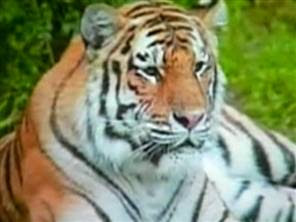
“I could never imagine that a tiger could so effortlessly leap from the ground on to an adult elephant’s head, which is at least 12 feet above the ground,” Vivek Menon, executive director of Wildlife Trust of India. Recently in India, a rare attack occured. An average tiger managed to jump, sail through the air, and take a shot at a man sitting on an elephant’s back. The man ended up losing three fingers. The tiger was a Siberian tiger, weighing 350 pounds, or 160 kilograms. Zoologists along with many animal experts are completely bewildered at the tiger's leaping ability. “What animals normally do, and what they can do, are often very different things,” says Dale Miquelle, director of Wildlife Conservation Society’s program in Russia. Well all I know, is that zoos and animal conservatories need to now make sure the animals are completely sustained in their cages or indicated areas, to keep people safe. But, I did find this article very informative and interesting.
I found this article at http://www.msnbc.msn.com/id/22575549/
Monday, January 7, 2008
Class Response: Density
In class these days, we have been learning about matter, volume, mass, and the density of an object. Matter is anything that has mass and volume (solid, liquid, gas) and can be found almost everywhere. Did you know that light, electricity, and sound are not matter? Mass is the amount of matter in an object. Mass is usually measured in grams, or kilograms. Volume, on the other hand, is the amount of space an object takes up. Volume is usually measured in centimeters-cubed if the object is a solid, or milliliters (mL) if it is a liquid. Density is the measurement of how much mass is contained in a given volume of an object; mass per unit volume. The formula to find the density of an object is mass divided by the volume of the object. In class, we learned to draw a triangle to help us remember the formulas for finding the mass, volume, and density of an object. It is really helpful. Overall, this subject in science is pretty interesting, and I like learning about it.
My sources: Science Class with Treasure =]
My sources: Science Class with Treasure =]
Monday, December 17, 2007
Giant rat and tiny possum discovered in Indonesia jungle

As the article states, "Finding new species of mammals in the 21st century is considered very rare." Recently, in Jakarta, Indonesia, a giant rat and a tiny possum was discovered by a team of American and Indonesian scientists. The animals were found in the Foja Mountains rainforest in eastern Papua province. "The giant rat is about five times the size of a typical city rat," said Kristofer Helgen, a scientist with the Smithsonian Institution in Washington. "With no fear of humans, it apparently came into the camp several times during the trip." The article also says that the possum was described as "one of the world's smallest marsupials." This discovery made me wonder whether or not there are even more new, exotic species of animals out there in the world. If there are, then our world has so many more magnificent creatures waiting to discover. My opinion on this article is that discovering more new animals is a fantastic thing, and this article really enlightened me.
I found my information at http://www.msnbc.msn.com/id/22290101/
Tuesday, November 6, 2007
Omega Meme : 6 Questions
I’ve tagged students for the Omega Meme!
The rules are as follows:
Each player answers the six questions posted on this blog.
The rules of the game are posted at the beginning before those answers are listed.
At the end of the post, the player then tags 8 people and posts their blog names, then goes to their blogs and leaves them a comment, letting them know that they have been tagged and asking them to read your blog.
Then follow the instructions about adding a page element at omegascience.blogspot.com.
6 Questions:
1. My favorite TV show is House because I like how they solve medical mysteries and the interesting patients they cure from various diseases and problems.
2. My favorite meal is Thai food because it tastes really good.
3. My favorite non-school activities are playing basketball, dance, and being with friends because I like to play sports and my friends are amazing.
4. Someone I look up to is my parents because they always support me and tell me to always think positive.
5. My goal for the future is to be some kind of doctor.
6. In the first hour after school I usually watch TV, go on the computer (AIM), hang out with friends, or do homework.
The rules are as follows:
Each player answers the six questions posted on this blog.
The rules of the game are posted at the beginning before those answers are listed.
At the end of the post, the player then tags 8 people and posts their blog names, then goes to their blogs and leaves them a comment, letting them know that they have been tagged and asking them to read your blog.
Then follow the instructions about adding a page element at omegascience.blogspot.com.
6 Questions:
1. My favorite TV show is House because I like how they solve medical mysteries and the interesting patients they cure from various diseases and problems.
2. My favorite meal is Thai food because it tastes really good.
3. My favorite non-school activities are playing basketball, dance, and being with friends because I like to play sports and my friends are amazing.
4. Someone I look up to is my parents because they always support me and tell me to always think positive.
5. My goal for the future is to be some kind of doctor.
6. In the first hour after school I usually watch TV, go on the computer (AIM), hang out with friends, or do homework.
Thursday, June 7, 2007
Class Response: Wikis and Earthquakes
In class, we've been learning about earthquakes, and why and how they occur. I find this subject very interesting. Earthquakes occur when the tectonic plates rub together, and the movement forces waves of energy to come to the earth's surface, causing the earthquake. Long ago, earthquakes were undefined, and unexpected. No one could tell the difference between 2 earthquakes, because they did the same exact thing. But the the seismograph was invented, still making earthquakes unexpected, but it created a seismogram, which is a picture of the motion of the earthquake, for future records. This helps scientists figure out the where the earthquake began, and what direction its moving in. Earthquakes are tragic happenings, and can cause serious injuries, and even death. They can cause building to fall and freeways and roads to fall or cave in. In addition, in class we are also learning how to post up wikis, and I find it fascinating. For future partner projects, a wiki is something I definitely plan on using. All in all, what I've been learning in class is really interesting.
I got my information and facts in school, in class.
I got my information and facts in school, in class.
Monday, May 7, 2007
Scientists unearth Superman's 'kryptonite'

Apparently, 'Kryptonite' which in the movie Superman Returns kills or takes away Superman's powers, has actually been discovered as a real mineral, that actually exists. On April 24th, 2007, this mineral was found by geologists in Serbia, and shares same chemical composition as the fictional kryptonite from outer space, used by Lex Luthor in the movie to weaken Superman. Chris Stanley, a mineralogist at London's Natural History Museum, was the one to discover the true identity of the mineral after searching online for its chemical formula, sodium lithium boron silicate hydroxide.
"I was amazed to discover that same scientific name written on a case of rock containing kryptonite stolen by Lex Luther from a museum in the film 'Superman Returns,'" Chris Stanley says.
After many tests, this substance has been confirmed as a new mineral by scientists at the Natural History Museum in London and the National Research Council in Canada. But instead of the large green crystals in Superman comics and movies, the real thing is actually a white, powdery substance which contains no fluorine and isn't radioactive. This mineral, to be named Jadarite, will go on show at the London's Natural History Museum.
I found my article at http://www.msnbc.msn.com/id/18289647/
Saturday, April 14, 2007
Class Response: Waves
In class, we are learning about waves. The waves we learned about are Longitudinal waves and Transverse waves. Longitudinal waves are waves that move the medium parallel to the direction in which the wave is travelling. Transverse waves are waves that move the medium at right angles to the direction in which the waves travel. Did you know that the highest point of a transverse wave is called the crest, and the lowest point is called the trough? We also learned a little bit about Electromagnetic waves, but these aren't visible. Most waves need a medium to travel through. A medium is the material through which a wave travels. The different types of mediums that waves can travel through are liquid, gas, and solid. But Electromagnetic waves don't need a medium to travel through. In longitudinal waves, there are compressions and rarefactions that occur. A compression is the part where the coils are close together, and a rarefaction is just the opposite, when the coils are spread out. Energy moves in waves.
The basic properties of waves are amplitude, wavelength, frequency, and speed. Amplitude is the maximum distance that the particles of the medium carrying the wave move away from their rest positions. Wavelength is the distance between corresponding parts of a wave. Frequency is the number of complete waves that pass a given point in a certain amount of time. Lastly, speed is the rate at which an object moves. This is one of the many things I learned in Science class, and waves are definitely fun to learn about.
Turtles swim Pacific in 'race' for survival

In this article, I read about turtles, Leatherback turtles to be specific, and how they are 'racing' to get to the Galapagos Islands from San Jose, Costa Rica, which have a distance of about 950 miles.
The turtles need to get to the Galapagos Islands, because that is where their feeding ground is. These turtles are on the endangered species list as well, and they have inhabited the oceans for about 100 million years. These Leatherback turtles have been tagged with satellite communication devices so that way their progress is being monitored, as well as their position. Now people are actually allowed to log on to this website [www.greatturtlerace.com] choose a turtle, and track the race. Some company sponsors have adopted turtles, and all the participants are asked to donate as well. The winner will be the turtle that travels farthest by April 29. And as for the satellite devices that are tracking each turtle, scientists consider it a huge breakthrough in science. Watching the world through the eyes of a turtle is truly fascinating.
Tuesday, March 27, 2007
S. Korean team claims first cloned wolves:
 Wow, after I read this article, I was shocked. I still believe that cloning should be banned everywhere, even though some types of cloning are beneficial, like therapeutic cloning. But full body cloning is absolutely wrong in my perspective. As this article stated, some South Korean scientists cloned the first wolf. They claim it was for saving these endangered species. It also turns out, that this team of scientists also produced the world's first cloned dog in 2005, an Afghan hound named Snuppy . Now, they have cloned 2 wolves, and the clones were named Snuwolf and Snuwolffy, that were born a year and a half ago.
This aricle really had me interested. I used to think it was a bad thing, but now, it seems that maybe, just maybe, it can help. While reading this, I found out that dogs/wolves are actually the hardest animal to clone, because of their reproductive cycle. But some how, this group of scientists managed to clone them anyways, and this is an amazing accomplishment.
[picture above: one of the clones of the wolves]
I found my article at http://www.msnbc.msn.com/id/17796859/
Wednesday, February 28, 2007
Class Response: Genetics Assessment
For Genetics Assessment, my project is on Therapeutic Cloning, and I have to oppose this operation. I have researched, and found enough information to answer my questions. It was a little difficult finding some information opposing Therapeutic Cloning, because most people are all for it, as it saves lives. But what people don't know, is that the term, "Therapeutic Cloning" was created to confuse the public and present this technology as something beneficial, when in reality, it kill people. How you ask? Well, Stem Cells are needed for this type of cloning. Embryonic Stem Cells. And these come from embryos, which are basically babies, not yet fully developed. Although my position was assigned to me, I very much agree, and oppose any type of cloning.
So far, Genetics Assessment has been pretty easy, and I have been managing my time wisely. For my presentation, I am planning to do a slide show, which I have already begun working on. Genetics Assessment is for showing how much you understand the subject, Genetics. I understand it well, after all those projects and worksheets. Genetics is a very extraordinary part of science.
I found some of my facts at [http://www.religioustolerance.org/clo_ther.htm]
So far, Genetics Assessment has been pretty easy, and I have been managing my time wisely. For my presentation, I am planning to do a slide show, which I have already begun working on. Genetics Assessment is for showing how much you understand the subject, Genetics. I understand it well, after all those projects and worksheets. Genetics is a very extraordinary part of science.
I found some of my facts at [http://www.religioustolerance.org/clo_ther.htm]
Tuesday, February 27, 2007
Class Response: Super Hero Project
The superhero project was very fun. It really got me into Genetics. Also, it helped me understand the subject better. For example, I finally understood the point of a Punnett Square. A Punnett Square is a chart which shows or predicts all possible gene combinations in a cross of parents, whose allele combinations are known. Using a Punnett Square, you can predict the genotypes and phenotypes of the offspring. On one website [http://www.usoe.k12.ut.us/CURR/Science/sciber00/7th/genetics/sciber/punnett.htm]
I found out that Punnett Squares are named after an English geneticist, Reginald Punnett. Now, for the superhero project, we used these to figure out the traits of the offspring of two random superheroes, of our choice. I had Toad and Silver Fox, who were two villians. Their offsrping barely inherited any of their traits. The offspring only got 3 superpowers, out of like 10. This helped me realize that heredity is almost random, in an organized way. Its like the traits are picked out of a hat, but they are done in a very organized manner. Like when scientist were trying to prove their theory(s) about heredity, they used these Punnett Squares, and other charts. Also, I understood about DNA, and RNA. In addition, I learned about dominant and recessive alleles, and how they affect every persons traits. I think Genetics is a very important part of science, and now I understand it much better.
I found out that Punnett Squares are named after an English geneticist, Reginald Punnett. Now, for the superhero project, we used these to figure out the traits of the offspring of two random superheroes, of our choice. I had Toad and Silver Fox, who were two villians. Their offsrping barely inherited any of their traits. The offspring only got 3 superpowers, out of like 10. This helped me realize that heredity is almost random, in an organized way. Its like the traits are picked out of a hat, but they are done in a very organized manner. Like when scientist were trying to prove their theory(s) about heredity, they used these Punnett Squares, and other charts. Also, I understood about DNA, and RNA. In addition, I learned about dominant and recessive alleles, and how they affect every persons traits. I think Genetics is a very important part of science, and now I understand it much better.
Monday, February 26, 2007
"As Asia Keeps Cool, Scientists Worry About the Ozone Layer"
In Asia, in the China and India area to be specific, heat is really killing them. About four months ago, a couple of scientists discovered that the “hole” made by the world’s use of aerosol spray cans, aging refrigerators and old air-conditioners had caused the ozone layer to once again expand, stretching once more to the record size of 2001. Now we can't let any more damage come to the ozone layer, for it protects us from the sun's ultra-violet rays. But now many scientists are concerned that with all these air-conditioners booming, more problems could occur.
The "hole" was found above Antarctica, and was mending very slowly. Scientists put the blame on 'chlorofluorocarbons', a chemical used in refrigerants. Some scientists are now saying that the damage to the ozone layer could take over a quarter of a century longer to heal, which is way more than they predicted.
I find this very scary. What would happen if out entire ozone layer disappeared? What would happen if the part of the ozone layer above Antarctica never healed? These are some of the questions I have, and would like answered. I think that everyone should stop using aerosol sprays as much, and the old refrigerants, too. They are really damaging our enviroment, and if our enviroment is damaged, we won't be able to live. So save our Earth!
I found my article at http://www.nytimes.com/2007/02/23/business/23cool.html?pagewanted=1&_r=1&ref=science
The "hole" was found above Antarctica, and was mending very slowly. Scientists put the blame on 'chlorofluorocarbons', a chemical used in refrigerants. Some scientists are now saying that the damage to the ozone layer could take over a quarter of a century longer to heal, which is way more than they predicted.
I find this very scary. What would happen if out entire ozone layer disappeared? What would happen if the part of the ozone layer above Antarctica never healed? These are some of the questions I have, and would like answered. I think that everyone should stop using aerosol sprays as much, and the old refrigerants, too. They are really damaging our enviroment, and if our enviroment is damaged, we won't be able to live. So save our Earth!
I found my article at http://www.nytimes.com/2007/02/23/business/23cool.html?pagewanted=1&_r=1&ref=science
Subscribe to:
Posts (Atom)